
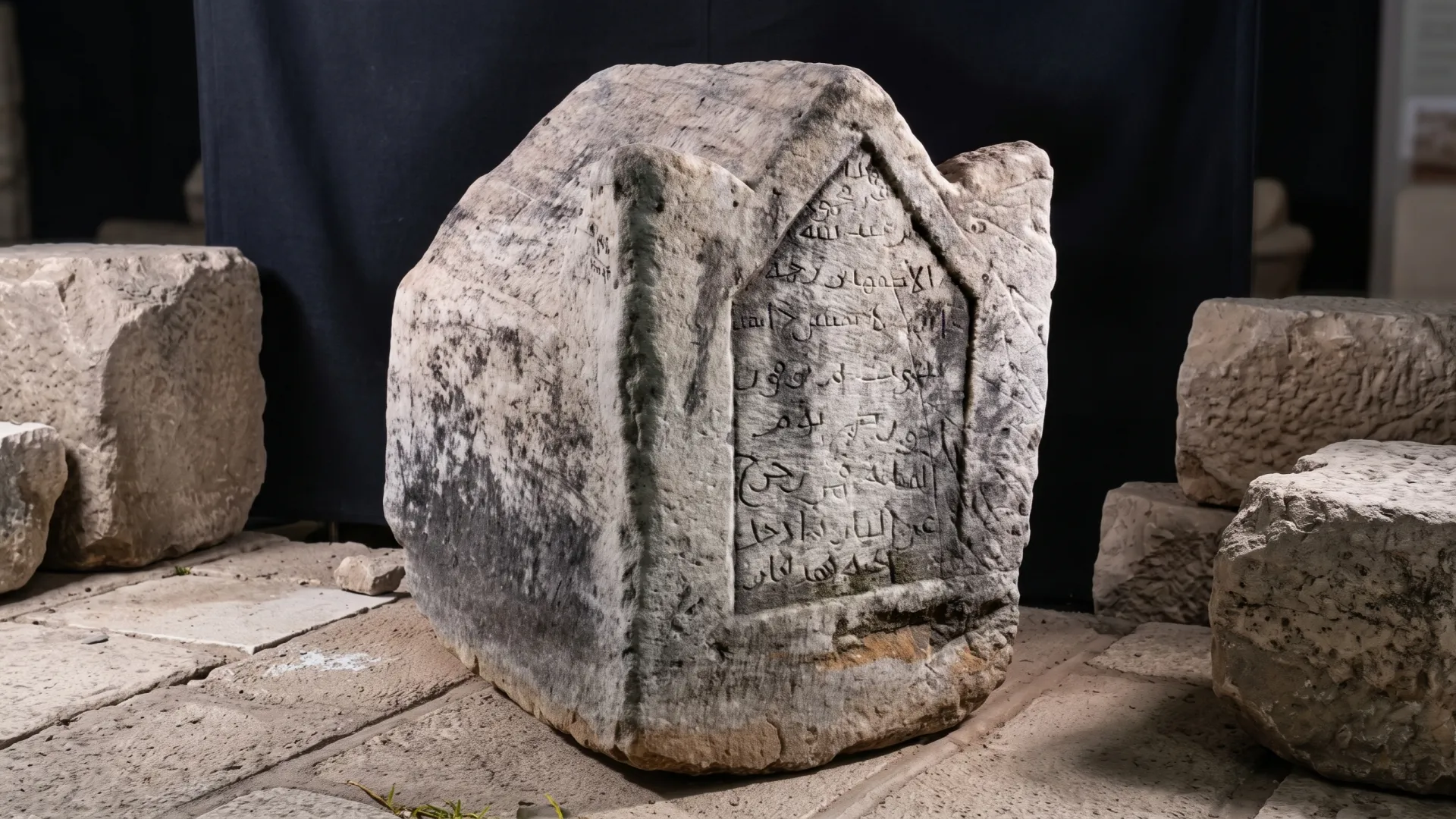
Seljuk Gravestones of İznik
The Seljuk Gravestones of İznik, located in the historic town of İznik in Bursa, are rare and valuable monuments that shed light on the early history of Turkish settlement in Anatolia. Dating to the period when İznik served as the first capital of the Anatolian Seljuk State in the late 11th century, these gravestones are among the few surviving material traces of the city's early Turkish-Islamic heritage.
Known as Nicaea in antiquity, İznik was an important political, religious, and cultural center during the Roman and Byzantine periods. Around 1075, the city came under Seljuk control and became the first capital of the Anatolian Seljuk State under Süleyman Shah, son of Kutalmış. Although relatively few monuments survive from this significant chapter in İznik's history, the Seljuk gravestones provide valuable evidence of the city's early Turkish presence.
According to historical research, the original Seljuk cemetery is believed to have been located outside the southern section of İznik's city walls. The cemetery itself has not survived, but several gravestones were reused as building materials during later repairs to the fortifications. Some of these stones can still be found incorporated into two towers of the historic walls.
One of the most remarkable features of the gravestones is their inscriptions. Considered important early written records of Turkish history in Anatolia, the inscriptions preserve the names of two individuals: Ahmed the Sepici and Mahmud ibn Abdullah of Isfahan. These names offer rare insights into the people who lived in Seljuk İznik and the cultural connections of the city.
The gravestones are also notable for their prismatic forms, which contribute to our understanding of early Turkish funerary traditions in Anatolia. Similar forms are known from other regions, particularly Ahlat in eastern Anatolia, suggesting possible connections between burial traditions brought westward by Turkish communities. Despite their relatively simple appearance, the stones are of exceptional historical value because of their inscriptions and cultural context.
The Seljuk Gravestones of İznik are more than memorials to individuals who lived centuries ago. They are historical documents that help illuminate the early stages of Turkish settlement in Anatolia, Seljuk culture, and İznik's role as a capital. Their significance extends to the fields of archaeology, art history, and epigraphy.
Today, these monuments form part of İznik's remarkable historical landscape, where Roman, Byzantine, Seljuk, and Ottoman heritage can be explored together. Alongside the ancient city walls and other historic landmarks, they offer visitors a deeper understanding of the civilizations that shaped the city.
The Seljuk Gravestones of İznik are rare surviving witnesses to the history of the first capital of the Anatolian Seljuk State. For travelers interested in Turkish-Islamic history and the cultural heritage of Anatolia, they represent a meaningful part of İznik's extraordinary past.
Interactions
Other Venues

For All Requests, Complaints, and Questions
444 16 00


