
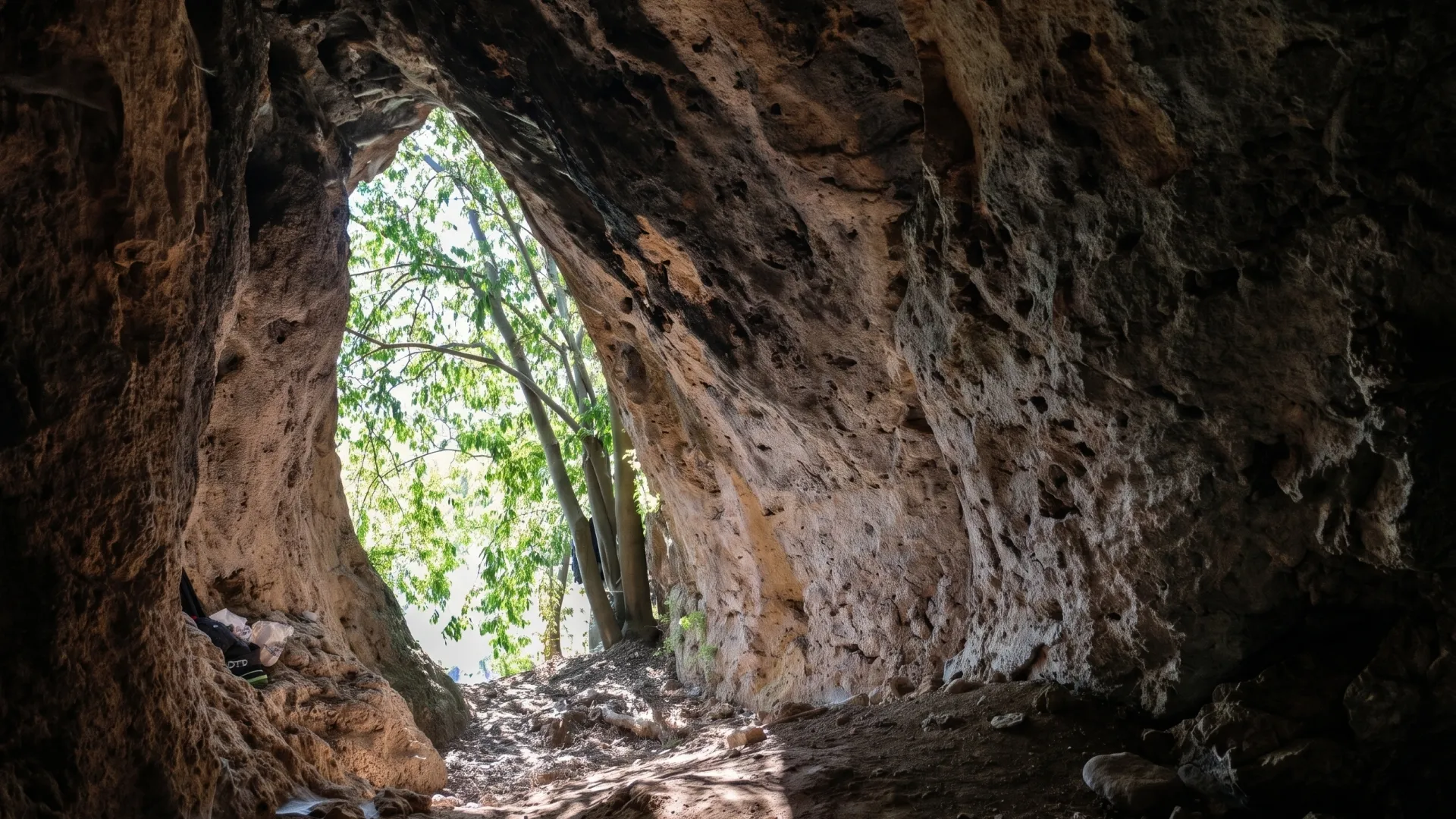
Sinekkaya Cave
Located in the mountainous landscape of Orhaneli, south of Mount Uludağ in Bursa, Sinekkaya Cave is one of the region's most significant prehistoric archaeological sites. Its discoveries, spanning several periods from the Paleolithic to the Neolithic, provide valuable insights into the lives of ancient human communities and the natural environment they inhabited.
The cave is situated approximately 6 kilometers northwest of Orhaneli town center, between the settlements of Girencik and Kusumlar. It lies in the Arı Kayası locality, on the northeastern slope of Buğluk Hill, within limestone formations overlooking the Oba Stream. The surrounding landscape, with its water sources and flint resources, offered favorable conditions for prehistoric human activity.
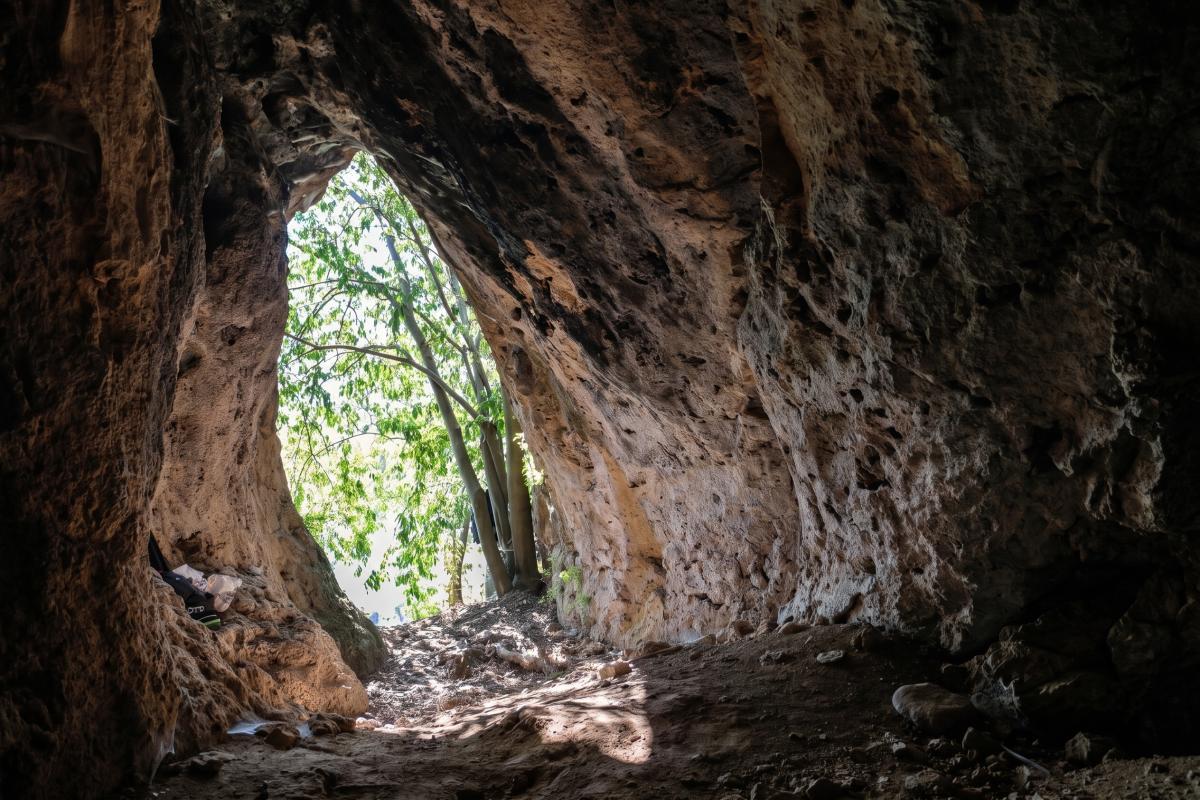
Sinekkaya Cave developed along a geological fault and has an interior area of approximately 100 square meters. A narrow entrance passage leads into a larger chamber, where temperatures remain relatively stable throughout the year. These natural conditions suggest that the cave may have provided shelter for prehistoric human communities and animals.
The site's archaeological importance is particularly associated with the Middle Paleolithic period, approximately 100,000–50,000 years ago. Excavations have uncovered numerous flint artifacts, including flakes, points, and side scrapers produced using the Levallois technique. These discoveries offer valuable evidence of prehistoric stone-tool technology and the ways early human populations utilized their surroundings.
The cave has also yielded artifacts associated with later prehistoric periods. Dufour bladelets and Gravettian points represent Upper Paleolithic technologies, while geometric microliths indicate Epipaleolithic activity. Neolithic pottery fragments provide evidence of human presence or activity during a much later phase of prehistory. Together, these finds make Sinekkaya an important site for investigating cultural developments in northwestern Anatolia.
Another remarkable aspect of the excavations is the discovery of prehistoric animal remains. Researchers have identified fossils associated with extinct Ice Age species, including the cave bear, cave hyena, and cave lion. Remains of red deer and wild horses also contribute to the reconstruction of the region's ancient ecosystems.
Sinekkaya Cave was identified during archaeological surveys led by Professor Mustafa Şahin in 2009. Excavations began in 2023 under the authority of the Bursa Museum Directorate, with Associate Professor Berkay Dinçer of Istanbul University serving as scientific adviser. Since 2025, the excavations have continued under Dinçer's direction.
The cave has suffered damage from unauthorized digging in the past. Archaeological teams are therefore undertaking careful recovery and documentation work, using three-dimensional recording, fine sieving, and specialist analyses to investigate disturbed deposits and preserve surviving evidence.
Sinekkaya Cave is especially important for understanding prehistoric connections between Anatolia and the Balkans. As the Paleolithic history of northwestern Anatolia remains relatively understudied, discoveries at this site have the potential to illuminate ancient human mobility, technological traditions, and environmental change.
Sinekkaya Cave is more than a natural geological formation. It is an archaeological archive preserving traces of humanity's distant past and revealing that Bursa's history extends far beyond its celebrated ancient cities and Ottoman monuments.
Interactions
Other Venues

For All Requests, Complaints, and Questions
444 16 00


